


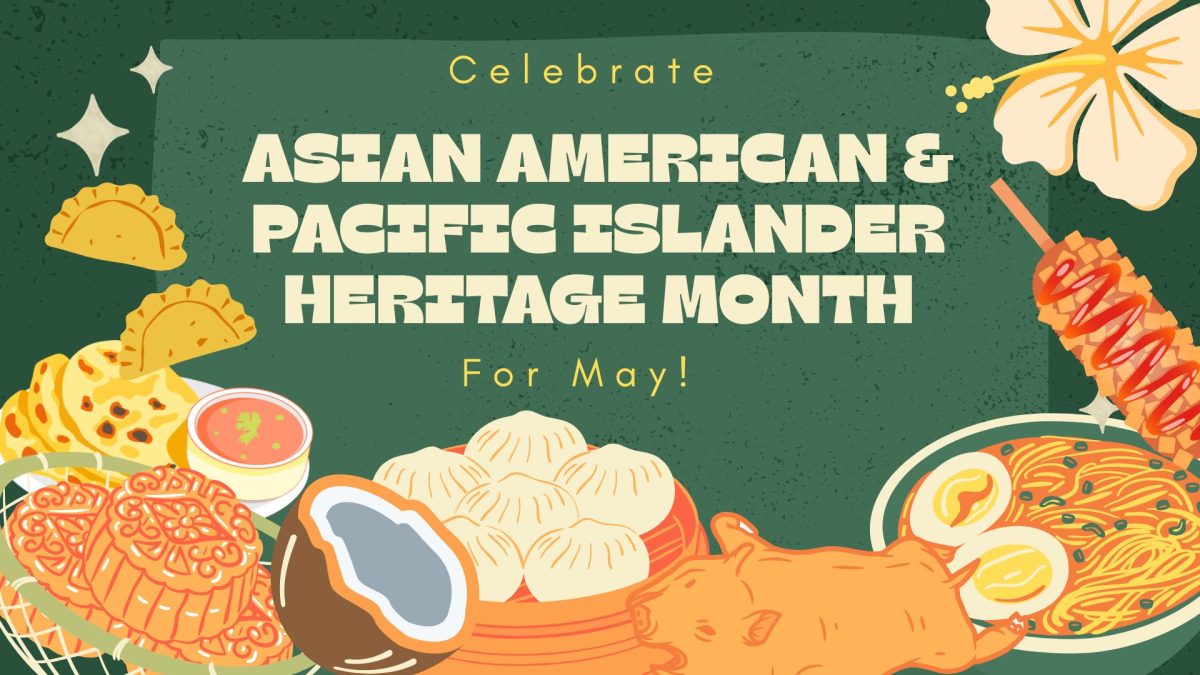
May 1 marks the start of Asian American and Pacific Islander (AAPI) Heritage Month — an important time to celebrate the history, contributions and culture of those of Asian or Pacific Islander heritage and their lasting impact on American culture.
AAPI Heritage Month originated in Congress in 1977, when New York Rep. Frank Horton and Sen. Daniel Inouye proposed similar legislation that resulted in the House Joint Resolution 1007. Passed by the House and Senate and signed by President Jimmy Carter in 1978, House Joint Resolution established AAPI Heritage Week in May, which later expanded into a monthlong celebration in the 1990s, according to The Library of Congress. As someone of Polynesian descent, which he refers to as being a minority of a minority, it is important to celebrate AAPI roots and take pride in cultural heritage, according to social studies teacher James Ferrel.
“Having diversity here, it really invites the opportunity to have these celebrations,” Ferrel said. “It’s cool that we’re even having this conversation right now and having an interview talking about cultural identities. Having the opportunity to talk about it is exciting, and it can open up the door for people to learn about culture, learn about diversity and what connects us as human beings.”
AAPI month is celebrated in the month of May to commemorate the immigration of the first Japanese immigrants to the United States on May 7, 1843, and the completion of the transcontinental railroad on May 10, 1869, whose western portion was built largely by Chinese laborers, according to the Library of Congress. The celebration of AAPI Heritage Month invites people of all backgrounds to explore and educate themselves on AAPI culture, whether by participating in a cultural event or experiencing new cuisines. With the multitude of facets to immerse yourself in this month’s offerings, one of the most accessible ways to engage with AAPI heritage is through food, according to Taiwanese Culture Club advisor and science teacher Michael Tang.
“Food in Asian culture is so big — everything’s always centered around food,” Tang said. “Asian food is so flavorful. There are so many different variations and styles. So I think that’s one of the best ways to celebrate, enjoying the food. That’s a gateway into a culture. I think people who are not Asian should try Asian food and try the different varieties. Irvine is a great place because you can literally try sampling all the major Asian foods.”
Asians and Pacific Islanders make up the largest ethnic group in Irvine, accounting for 44.3% of the total population, according to the City of Irvine. The influx of cultural diversity in Southern California has given rise to numerous AAPI vendors and businesses that have played an important role in shaping Southern California’s identity.
“Yeah, one of the things I see is a lot of California has cultural diffusion, so we see a lot of fusion, whether it’s in cuisine, whether it’s in kind of cultural events,” Ferrel said. “I do see the embracement of understanding, different cultural things, and there are really cool clubs out there and organizations that do honor kind of Polynesian culture, whether it’s if you’re Micronesian, Hawaiian, Samoan, or whatever it may be within the island groups, there’s outlets there, which is cool. I think Southern California brings a lot of different people from different walks of life together.”
To celebrate AAPI Heritage month, community members can support a local AAPI-owned restaurant, try a new matcha concoction or attend a cultural festival. It is important to embrace diversity and cultural knowledge not only throughout AAPI Heritage month but also year-round.