


At Portola High, Halloween does not look as festive as it could. While a handful of students come in costume, most do not. Students should dress up and wear costumes to school on Halloween because increased participation would increase school spirit and encourage expression.
Students have lots of flexibility and freedom in choosing what to wear — as long as they follow normal dress code and avoid full-face masks, weapon-like props such as fake swords and costumes that suggest political extremism, according to Assistant Principal Amy Paulsen. Besides these guidelines, creativity is encouraged, making it easy for any student to join in on the fun.
“Where something would come to be an issue is if it caused some kind of disruption on campus,” Paulsen said. “If someone were to come as a political figure, are they for that person or against that person? Why are we causing such a conflict in our campus? We might talk to that person and say, ‘I don’t think that’s appropriate for a high school.’”
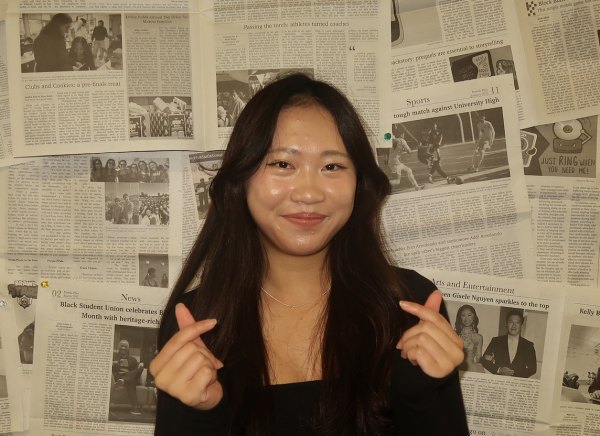
Despite Halloween being an opportunity to dress more creatively at school, many students do not take the opportunity. Senior Cara Lin has dressed up to school every year since freshman year. This year, she has two costumes planned: Rapunzel to match with a group of friends, along with a duo apple costume. She has noticed that few people come to school dressed up, although they do dress up outside of school, but notes that dressing up at school can make the holiday even more special.
“It adds a little bit of fun to an otherwise normal day,” Lin said. “It can cheer people up. I’ve had people tell me, ‘that’s a cool costume,’ and whenever the teachers do group costumes or something funny, it always makes my day better.”
In younger generations, social anxiety disorder is becoming increasingly prevalent, which may play a role in why many students remain hesitant towards dressing up for Halloween. For science teacher Caitlin Munn’s freshmen students, coming to school dressed up in costume can feel risky as they fear standing out in a crowd of students who are not dressed up.
“I actually had this conversation with [the freshmen],” Munn said. “They were like, ‘Oh, should we dress up or not?’ And I said, ‘Yes.’ And they said, ‘Well, what if nobody else dresses up?’ And I was like, ‘You guys will actually look cooler than everybody else.’”
Munn said that she has always encouraged her students to dress up, aiming to reduce the stigma that students may have around costumes. In fact, dressing up can help address social anxiety, creating a more open atmosphere on campus by encouraging students’ stylistic expression.
“[Dressing up] allows kids to express themselves, in a way,” Munn said. “By encouraging them, especially as teachers, it gives them that little confidence boost of ‘Okay, I can come to school wearing what I want to.’ Hopefully, we see a lot more students wearing a costume this year.”
Ultimately, dressing up for Halloween should not just be limited to trick-or-treating or other festivities; wearing costumes to school can lead to a more enjoyable and connected school atmosphere, allowing students to feel comfortable in expressing their creativity.